The 40-Hour Workweek Now Has a Timeline. When Does It Affect Your Company? | ChessMap
The 40-Hour Workweek Now Has a Timeline. When Does It Affect Your Company?
What Mexican businesses need to know about the gradual reduction of the statutory workweek from 2026 to 2030.
This is not a proposal. It is not a pending discussion. Mexico's Secretary of Labor and Social Welfare, Marath Bolaños, formally announced the gradual reduction of the maximum statutory workweek, with a final deadline of January 2030. The process has already begun, and it follows a concrete schedule that every business operating in Mexico needs to understand.
The Reduction Schedule
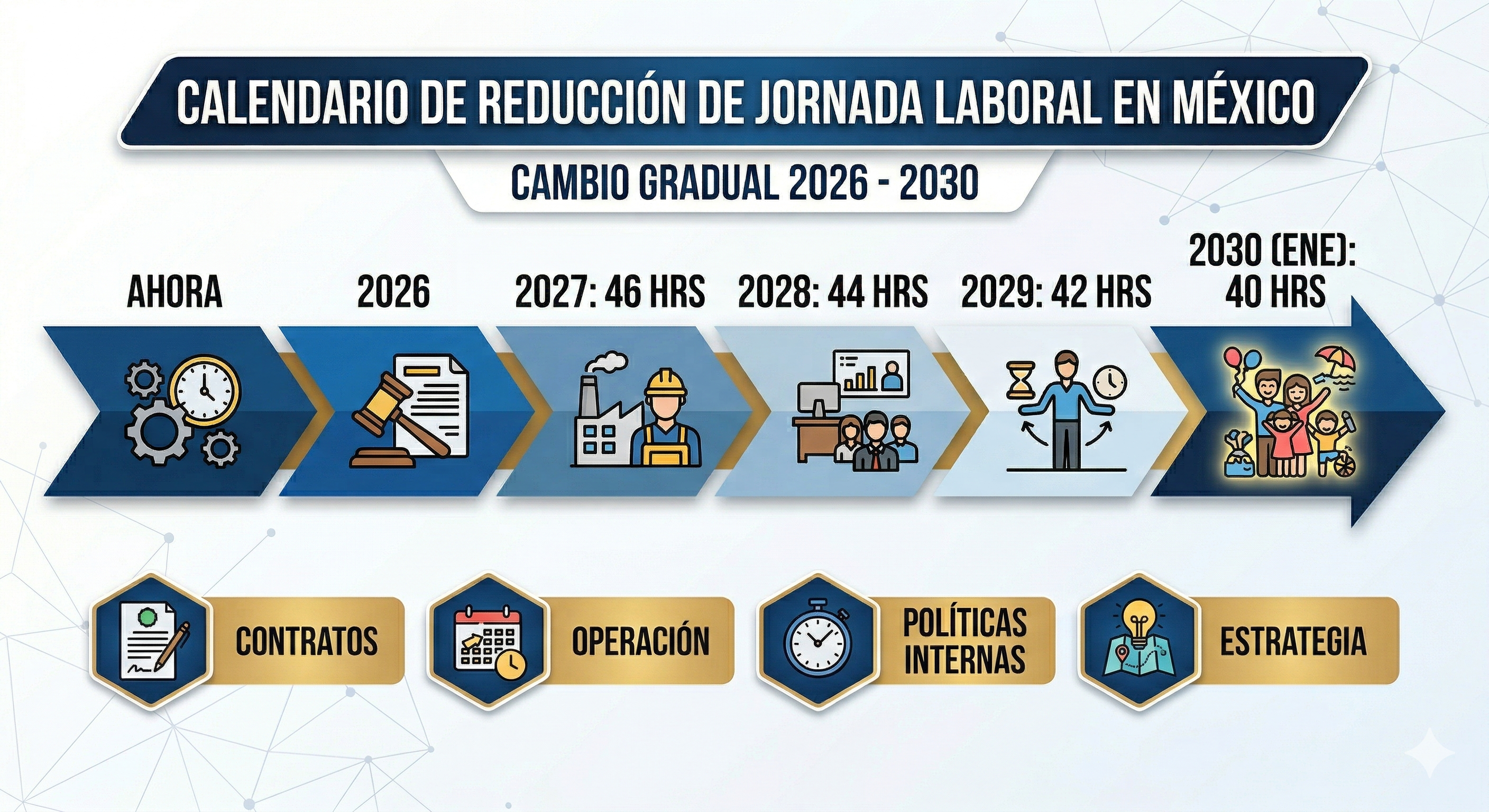
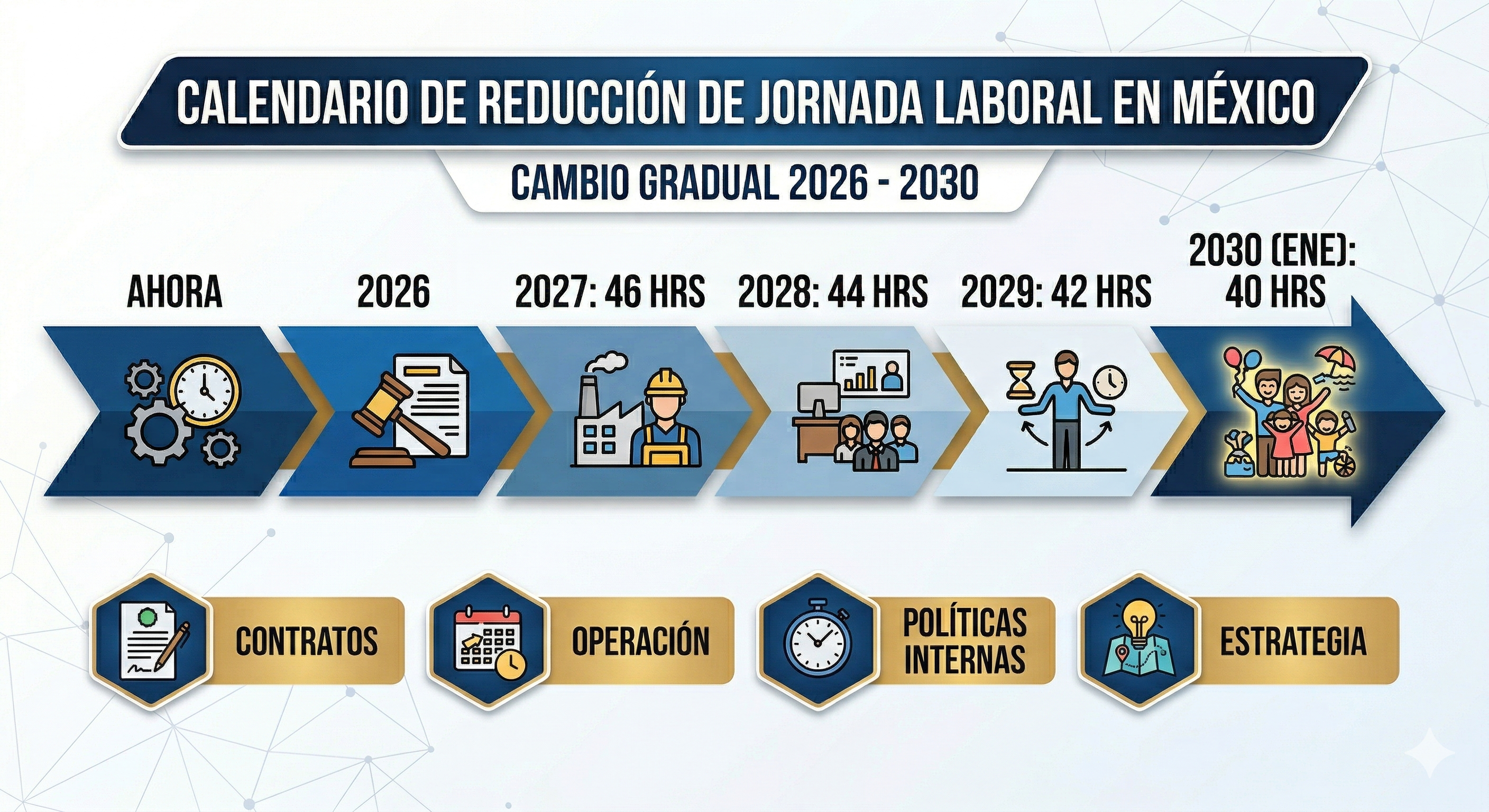
The transition takes place in three clearly defined stages:
- 2026: Regulatory transition year. The reform enters into force pending approval by Congress. The workweek is not yet reduced, but the legal framework begins to take shape.
- 2027: First reduction — 46 hours per week. The maximum statutory workweek is reduced from 48 to 46 hours. All employers must comply with this new limit.
- 2028 to 2030: Progressive reduction to 40 hours. The workweek is reduced by 2 hours per year: 44 hours in 2028, 42 in 2029, and 40 hours as of January 2030.
Why Acting Now Matters More Than Acting in 2029
Each stage of the schedule modifies the maximum statutory workweek. That has direct consequences across several areas that cannot be resolved overnight:
Individual and collective bargaining agreements that currently reference the 48-hour maximum will need to be reviewed and updated at each stage. Shift structures and operational models in companies already operating at the current statutory limit will require restructuring. Internal policies on working time, overtime, and rest periods will also need to be aligned with the new legal framework at each milestone.
Companies that wait until each change is imminent will have far less room to make adjustments properly. Those that begin mapping their current situation today will have a genuine advantage.
One Concrete Step You Can Take Right Now
Before 2027 arrives, it is worth conducting an internal assessment: How many of your employees currently work schedules at or near the statutory limit? Do your collective bargaining agreements include clauses tied to the maximum statutory workweek? Can your shift structure absorb the reduction without disrupting operations? The answers to these questions will define how urgent it is to act — and where to start.
Do you already know how this timeline affects your operations?
At ChessMap, we help companies anticipate and manage labor law changes. If you would like to review what adjustments your business needs to make before each stage takes effect, we would be happy to schedule a conversation.
This publication has been prepared exclusively by Manuel Giménez Martínez, who bears sole responsibility for its content. ChessMap acts solely as a dissemination platform and assumes no responsibility for the opinions, interpretations, or information contained herein. This material is intended for general informational and opinion purposes only; it does not constitute legal advice, an institutional opinion, a legal opinion, or a legal expert report, nor does it create an attorney-client relationship. For any specific matter, professional personalized legal advice is recommended.



Escribe un comentario